

Traditional search sends you a list of links you click through yourself. AI search reads those same web pages and hands you a written answer, often without a single click. That’s the short version. The longer version is where things get interesting, and where most explanations either overstate the shift or ignore it completely.
This page covers both, with real numbers behind every claim.
How traditional search actually works
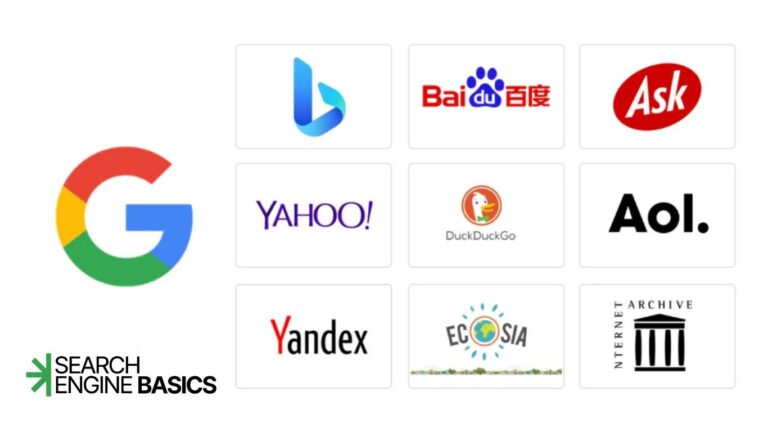
Google, Bing, and similar engines run on three stages: crawling, indexing, and ranking. A bot called Googlebot follows links across the web and downloads pages it finds. Those pages get added to a massive search index, a kind of catalogue of everything Google has seen and decided is worth storing. When you type a query, Google’s ranking systems sort through that catalogue and return a results page, ordered by relevance, freshness, and a long list of other signals.
You then pick a result and click. That click is the entire business model. Publishers write content, Google sends traffic, and ad revenue or conversions follow. It’s worked this way for almost three decades.
The result you get is a list. Ten blue links, maybe a featured snippet at the top, maybe a knowledge panel on the right. You do the synthesizing. You open two or three pages, compare them, and form your own answer.
How AI search works differently
ChatGPT Search, Perplexity, Google’s AI Overviews, and Gemini don’t hand you a list. They read multiple sources, then write a single answer in plain sentences, usually with citation links tucked into the text. Ask a follow-up question and the system remembers the context of what you just asked. That conversational back and forth is the part traditional search was never built to do.
Under the hood, these systems still depend on crawling. OpenAI runs its own crawler, OAI-SearchBot, to pull live web content into ChatGPT Search results. Anthropic and Perplexity do the same. The difference is what happens after the crawl: instead of indexing a page so a human can find and click it, the system extracts facts from the page and weaves them into a generated response.
This is the part beginners mix up most often, so it’s worth naming directly: a search engine and an AI chatbot with search ability are not the same product, even though they can feel similar. A traditional search engine indexes the entire web in advance and ranks it for every possible query. An AI search tool typically retrieves a smaller, query-specific set of pages at the moment you ask, then summarizes them. One is a library catalogue. The other is closer to a research assistant who runs into the library, grabs a few books, and reads you the relevant parts.
What “Answer Engine Optimization” means
You’ll see this term more in 2026: Answer Engine Optimization, or AEO. It’s the practice of structuring content so AI systems are more likely to cite it in a generated answer, the same way SEO is the practice of structuring content so Google ranks it well. The two overlap heavily. Clear headings, direct answers near the top of a page, and well-sourced data all help with both. But the goal is different. SEO chases a ranking position. AEO chases a citation inside someone else’s generated text, where you may never see a click at all.
This is genuinely new territory. Nobody, including the platforms themselves, has published a complete picture of what gets a page cited in an AI Overview versus what gets it ignored.
So how big is the shift, really?
Here’s where a lot of articles either panic or shrug, and both reactions miss the actual data. The picture depends entirely on which slice of the internet you’re measuring.
At the broadest level, Google still dominates by a wide margin. Cloudflare Radar’s referral data for May 2026 puts Google at roughly 87.6% of all search referral traffic, with Bing, TikTok, Yandex, and DuckDuckGo splitting most of the rest. Every AI search engine combined, meaning ChatGPT, Gemini, Claude, and Perplexity together, accounts for under one percent of search referrals by this measure. By that yardstick, AI search hasn’t dented traditional search traffic in any measurable way yet.
Other measurement approaches tell a different story, because they’re counting a different thing. Industry reports that track AI assistant referrals specifically, rather than comparing them against Google’s total volume, show those referrals growing fast in relative terms even while staying small in absolute terms. StatCounter’s chatbot referral tracking for March 2026 shows ChatGPT sending the large majority of measurable AI referral traffic, with Gemini and Claude both gaining share over the prior year.
The honest summary: AI search is still a rounding error next to Google when you measure all search referral traffic across the web. But within the slice of traffic that does come from AI tools, that slice is shifting fast, growing year over year, and increasingly fragmented across more than just ChatGPT. Treat any single statistic you read about “AI search market share” with caution until you check what exactly was measured. The numbers above will look dated within a few months. That’s the nature of a market this young.
Featured snippets, then AI Overviews
Featured snippets used to be the prize everyone chased: the single answer box pulled out of a ranked page and placed above the rest of the results. In 2026 they’re sharing space with AI Overviews, Google’s own AI-generated summary that appears above traditional results for many queries. That has changed what “ranking well” actually looks like. A page can rank first and still get less traffic than before, because the answer is now visible without a click.
Zero-click search, meaning a query that ends without the user visiting any website, isn’t new. It’s been growing for years through quick answer boxes and knowledge panels. AI Overviews have accelerated that trend further, though the exact percentage of zero-click queries varies by source and by query type, and figures here change quickly enough that any specific number is a snapshot, not a fixed fact.
Is AI replacing Google?
Not yet, and not in the way some headlines suggest. Google itself owns AI Overviews and is folding generative answers directly into its own results page, rather than losing ground to a separate competitor. Among the standalone AI products, ChatGPT remains the largest by referral volume, though its share of that category has been falling as Gemini, Claude, and Perplexity gain ground. Google’s own documentation through Search Central continues to describe crawling and indexing as the foundation of how its systems work, and that foundation hasn’t changed even as the results page on top of it evolves.
What’s actually happening is layering, not replacement. Traditional search still handles the bulk of query volume. AI search is growing inside that volume and changing user expectations about what an answer should look like. Both are likely to coexist for years, with the line between them blurring as Google adds more AI features to its own results.
FAQ’S About AI Search vs. Traditional Search
1. Is AI search going to replace Google?
Not based on current data. Google still handles the overwhelming majority of search referral traffic. AI tools are growing but remain a small slice of total search activity as of mid-2026.
2. What’s the difference between AI Overviews and ChatGPT Search?
AI Overviews appear inside Google’s existing results page, generated from pages Google has already indexed. ChatGPT Search is a separate product with its own live crawling and a conversational interface, not tied to Google’s index at all.
3. Does AEO replace SEO?
No. They overlap and reinforce each other. A well-structured, clearly written page tends to perform in both traditional rankings and AI citations, though optimizing specifically for AI citation is still an emerging practice without settled rules.
4. Why do AI search statistics vary so much between sources?
Different reports measure different things: total search referrals, AI-specific referral share, chatbot market share, or citation rates. Always check what was actually measured before comparing numbers across sources.
Where to go next
To understand the mechanics behind both systems in more depth, read our pillar guide on how search engines work, which walks through crawling, indexing, and ranking from the ground up. If you want the full picture on Google’s AI Overviews specifically, including how they’re triggered and what content tends to get cited, that’s covered in our AI Overviews explainer. And for the latest sourced numbers behind everything mentioned here, our market share stats page tracks the figures as they shift.